What's On My Mind - October 2026
What’s On My Mind
What’s On My Mind
How Your Mindset Can Build Unbreakable Technique
This Month’s Health Challenge
Sit Less, Move More
What’s On My Mind
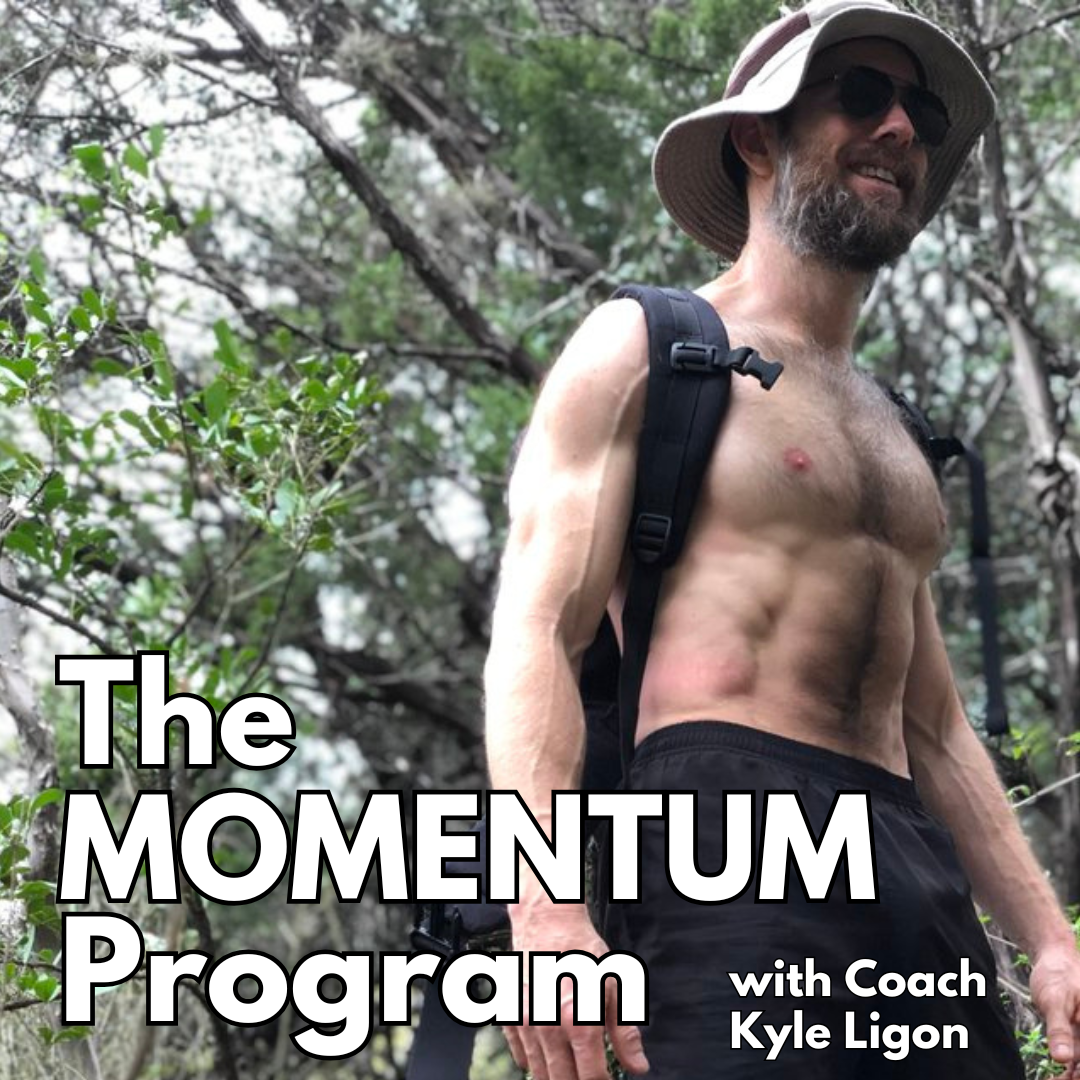
How Your Mindset Can Build Unbreakable Technique - by Kyle Ligon
Technique standards from competitions like CrossFit, Hyrox, powerlifting, and weightlifting have infiltrated gym culture as the ultimate litmus test for a “good” rep. But adopting competition standards for your daily training is a mistake that will hold your progress back.
I am not a professional athlete nor have I ever been trying to be one. My goals are functional performance, body composition, joint health, and overall wellness (My Non-Negotiable Fitness Goals). My movement standards need to reflect that, making my training standards significantly different from competition standards
In powerlifting, athletes get three attempts at a back squat, bench press, and deadlift to find their 1-rep max. In CrossFit, variations of the squat appear constantly. In both sports, the standard for a squat is simply standing all the way up at the start and finish, and passing through a position where the hips drop below the knees.
There are purposefully no standards on technique beyond range of motion. This is not just required to simplify judging to a level that is reasonably fair, but it actually creates a situation that is great for us as observers. With athletes free to use whatever technique they want within the low bar of range-of-motion requirements, we get to see what techniques the best in the world adopt, how those choices carry risk, and how much emphasis the athletes put on form. It is survival of the fittest for movement, where only the most effective techniques show up at the world-class level.
Westside Barbell is a powerlifting community known for its world-class lifters, but also for its hardcore reputation involving gear, extreme intensity, and aggressive training environments that sometimes involve alcohol and fighting. Yet, what stands out most is their fanatical focus on developing technique. They are constantly coaching each other on every rep, honing mechanics far beyond the simple standard of, “Did I go low enough?” They hold themselves to a much higher standard in training than they face in competition because they know the best results require elite technique in conjunction with elite strength.
The Context Trap
We’ll come back to the "competition standard trap," but it isn't the only thing you need to watch out for; there is also the "context trap." Most people who are able to think beyond competition standards start looking to the best in the world to learn technique. But often, the context of why those athletes move the way they do is not accounted for.
Powerlifting tests maximal strength, and most federations allow the use of performance-enhancing drugs and specialized gear. Drugs change training volume and recovery protocols dramatically. Gear changes the actual biomechanics of the lift entirely:
| Equipment | Geared / Competition Technique | Functional / Raw Technique |
|---|---|---|
| Weight Belt | Breathe and Push: Put the belt on extremely tight. Breathe into your lower abs and push out 360 degrees against the physical barrier of the belt to brace. | Draw In and Flex: Draw your belly button in, pull your rib cage down, and extend tall. Breathe into your lower abs and flex out in 360 degrees while keeping the belly button drawn in. |
| Squat Suit | Sit Back: A squat suit significantly supports the athlete at the bottom of the squat, making it feel closer to a box squat. The athlete sits far back with more vertical shins to leverage the suit's tension. | Drop Down: Hips travel back, but the squat path is more straight down. The knees travel naturally much further forward than they would with a squat suit, creating a non-vertical shin angle. |
If you are working out to improve your life, play sports, and stay healthy, adopting techniques designed to leverage artificial gear will not have optimal carry-over to the real world.
Setting Your Own Standard
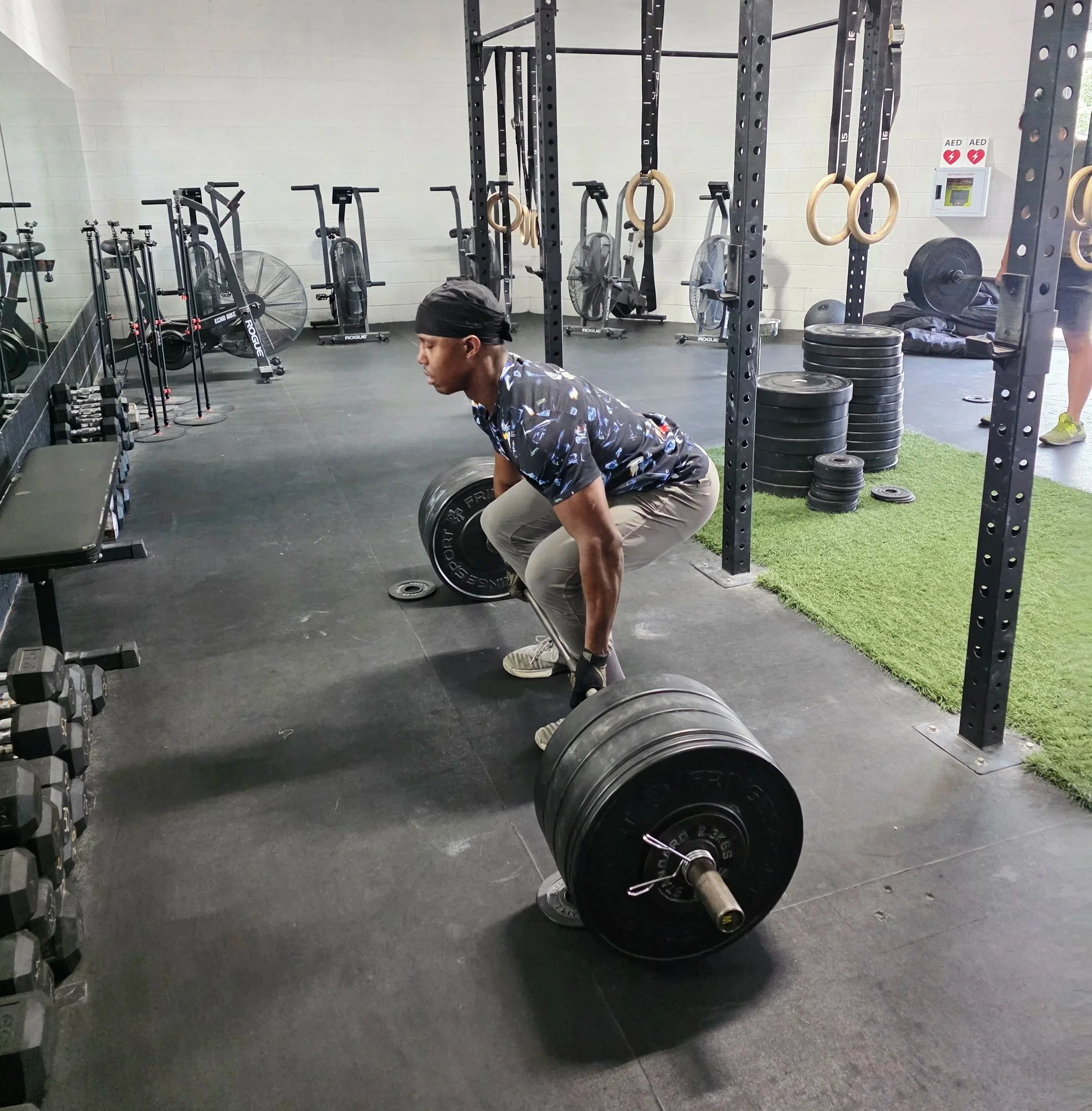
Our standards for our workouts must include both range of motion and technique, and both must be chosen in the context of our bodies, current fitness level, and goals.
There are people in the gym who have tight hips and ankles. They cannot meet the competition standards of a squat unless they compromise their mechanics or force themselves lower than their body can effectively handle. We see a lot of issues in the gym with people trying to force their hips below parallel when they don’t yet have the mobility for it. Range of motion should always be specific to the individual.
For me, it does not matter if a rep would technically count in a competition. Here is how I think about it using the back squat as an example:
Only a back squat that goes through the fullest range of motion my mobility can handle, using techniques that mimic functional movement patterns, meets my criteria. Everything else is a variation that I likely do not include in my program. I even give the other variations satirical names to distinguish them in my head from the actual technique I want to develop. For example, a back squat wearing a weight belt and a squat suit is a powerlifting back squat. I’m not saying it's bad; I’m saying a powerlifting back squat is different than my back squat and is not the best exercise choice for my goals.
Similarly, if my focus is on glute engagement and I perform a rep with dormant glutes, I didn't do a back squat. I did a disengaged glute squat. Just as I wouldn't do a front squat and say I did a back squat, I exaggerate the differences in how technique can break down. I view a knees-caving squat, a rounded-back squat, or a weight-on-the-toes squat as all distinctly different exercises. I play up the ridiculousness of my naming strategy by imagining how absurd it would be for a coach to program a "disengaged glute back squat" for me.
This thinking completely reframes how I track personal records, ensuring I primarily focus on developing techniques that are useful to the life I want to live. I don’t focus on what would pass as a good rep in competition; I track Technical Personal Records (Technical PRs). I might note a heavier weight I lifted that had an issue in my journal, but I will flag the technique breakdown alongside it. That data tells me my body is strong enough for the load, but my skill and coordination haven’t yet caught up to that number.
This is why we shouldn't view workout scores as just numbers on a whiteboard or a pass/fail on competition depth. Instead, we should treat training like a gymnastics competition, which grades both the difficulty and the execution (Scoring Workouts Like a Gymnasatics Competition). Everything in the gym should be done in the context of your goals.
MAKE THE RESULTS YOU WANT A REALITY
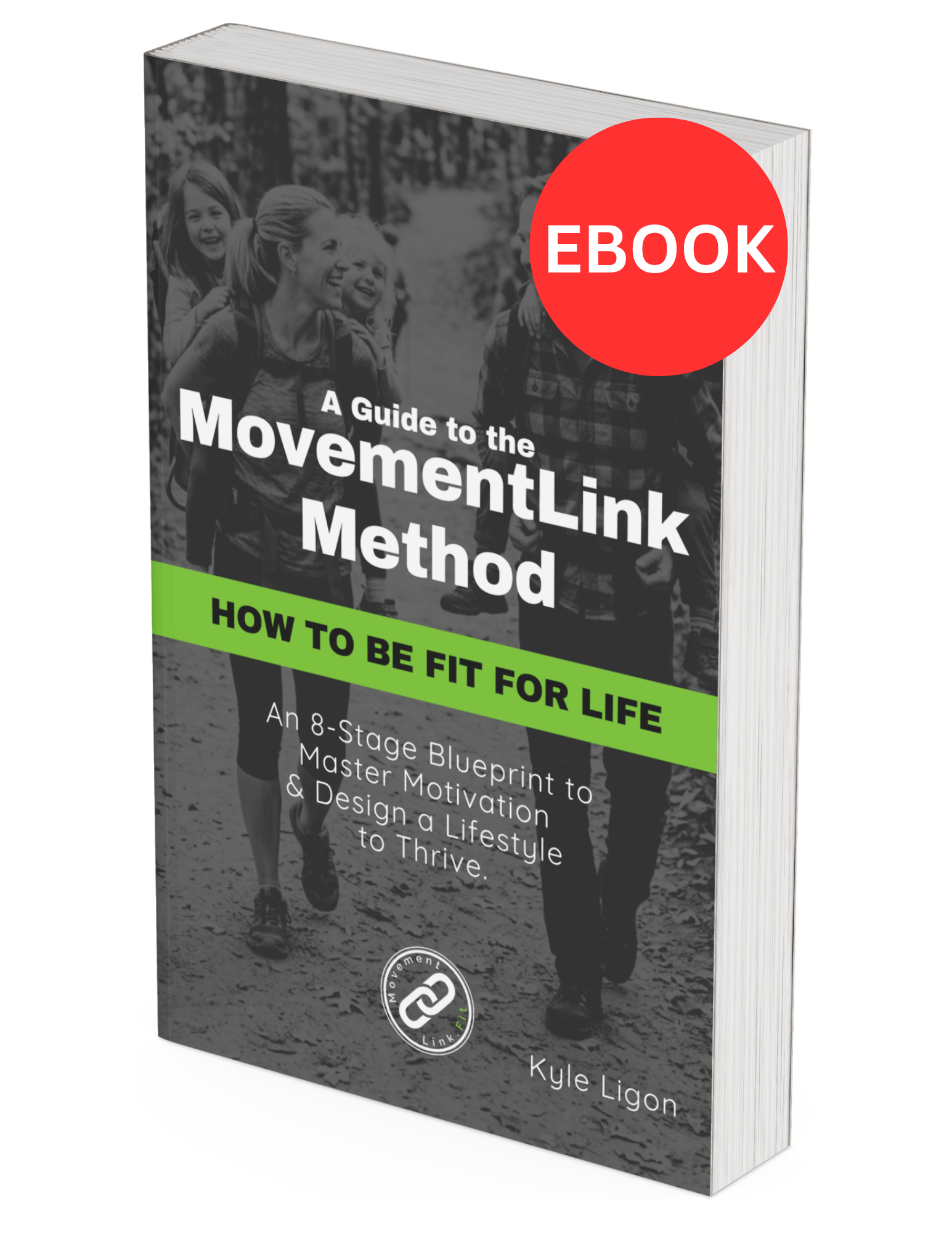
I have been running clients through my MOMENTUM transformation program for 8 years with tremendous success. But, with the amount of 1-on-1 attention I provide in the program, it creates a cost that has been prohibitive for some. I have finally consolidated the MOMENTUM program into one, easy to navigate EBOOK, so that more people can finally access the information that has changed my life and so many others.
When you finally “Get It”, the results you’ve been after are inevitable.
This Month’s Health Challenge
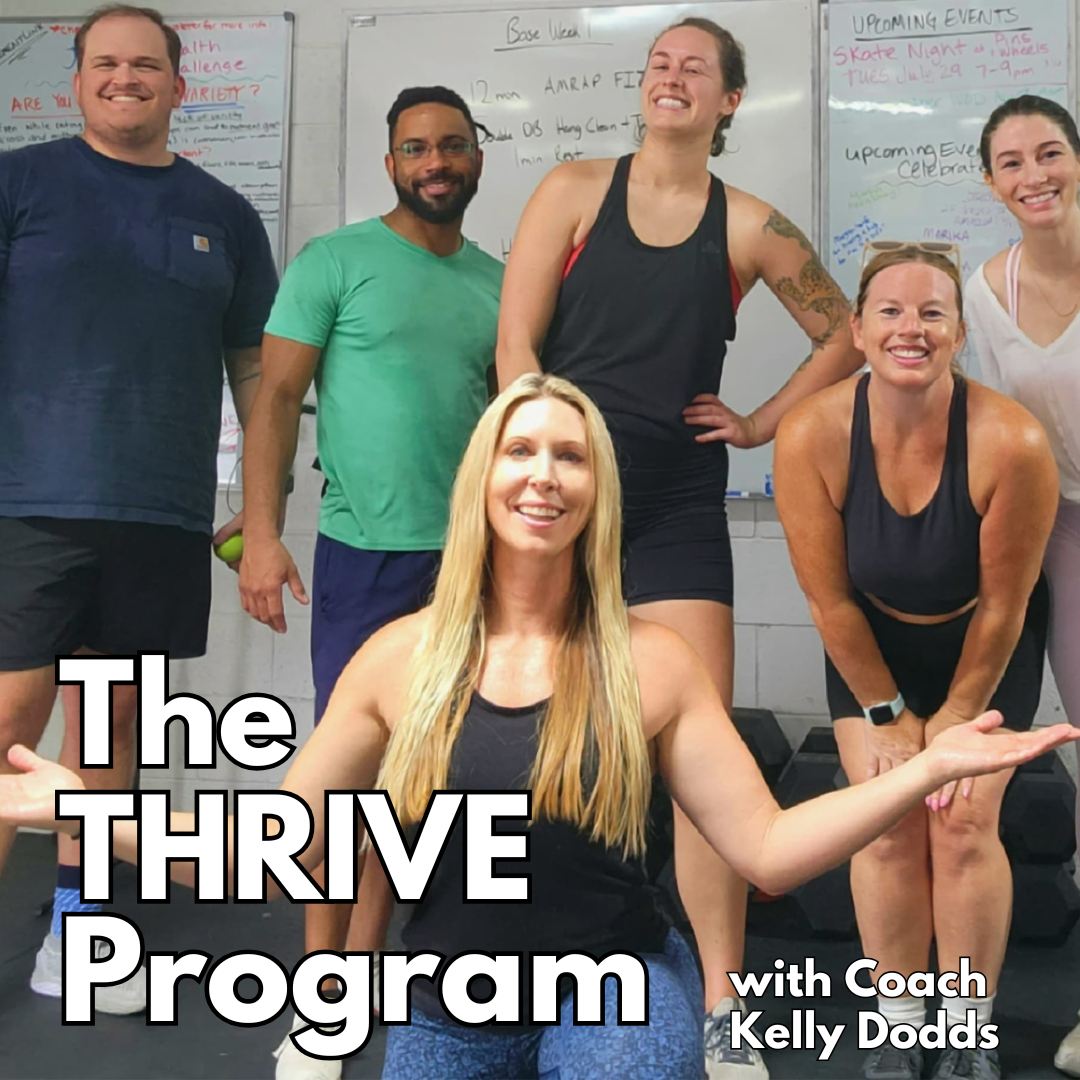
Sit Less, Move More - by Kelly Dodds
Most of us know we should exercise.. We come to the gym, lift weights, do cardio, and improve our fitness. But what happens during the rest of your day?
You can work out for an hour and still spend most of your waking hours sitting. This month, we're paying attention to movement that isn't a workout.
This activity is called Non-Exercise Activity Thermogenesis, or NEAT. It is the energy we expend through movement that isn't sleeping, eating, or intentional exercise. Non-exercise activity is walking through the grocery store, carrying groceries from the car, cleaning the house, yard work, taking the stairs, walking the dog, moving around at work, even fidgeting. None of these things feel like exercise, but they add up. The difference in daily movement between people can be surprisingly large.
We tend to think about physical activity as something we schedule: “I worked out today.” But our bodies don't separate the day into workout and unplanned movement. Movement counts whether you're breaking a sweat or not.
Exercise and daily movement aren't the same thing
This distinction is important.. structured exercise gives us adaptations that ordinary movement doesn't. Lifting makes us grow more muscle and get stronger, conditioning improves cardiorespiratory fitness and mitochondria function, training challenges our bodies to create adaptations.
NEAT doesn't replace that, but exercise doesn't make the rest of the day irrelevant either.
Imagine two people who do the exact same one-hour workout. One spends most of the remaining day sitting, the other walks the dog, takes the stairs, moves around at work, does chores, walks after dinner, and generally spends less time sitting. They did the same workout but they did not have the same activity level.
Ideally, we want both: Exercise to improve our physical capacity AND movement throughout the day to utilize our capacity.
How much movement do we actually need?
You've probably heard. “Get 10,000 steps per day.” It's a nice round number, but it's also not a magic number. Recent research combining data from dozens of studies found that many health benefits increased substantially as people moved from very low step counts toward roughly 5,000–7,000 steps per day. Benefits didn't suddenly appear at 10,000 steps.. 9,999 isn't a failure.
Overall, the biggest benefit may be for the people who currently move the least. If you average 3,000 steps per day, getting to 5,000 may be a much more meaningful goal than deciding 10,000 is impossible and doing nothing to increase step count.
This is a recurring theme in health: You don't have to be optimal to get better.
What about sitting?
Steps aren't the whole story.. We also have evidence that spending long periods sitting without moving isn't ideal. This gets interesting because researchers have actually brought people into laboratories, fed them standardized meals, and compared uninterrupted sitting with sitting interrupted by short periods of movement. Breaking up prolonged sitting with brief bouts of light walking improves post-meal glucose and insulin responses compared with remaining seated–and the movement doesn't have to be strenuous. Even a few minutes of light walking can make a measurable difference.
That gives us another useful strategy: Don't just exercise a few times per week, move repeatedly.
If you work at a desk, try getting up periodically.. walk to refill your water, take the stairs, walk while you're on the phone, go outside for five minutes, walk around the building, walk to the restroom, do something instead of sitting through another 60 minutes of your day. Small bouts of movement may not feel important individually, but the point is that you repeat them every day and the steps add up.
Walking after meals
One of the easiest places to add movement is after eating. Your muscles can take up glucose when they're contracting, which is one reason light activity after a meal can reduce the post-meal glucose response compared with sitting. You don't need to turn lunch into another workout, but try walking for 5–10 minutes after a meal. If you do it after lunch and dinner, you've added 10–20 minutes of movement in your schedule.
This Month’s Challenge
This month is about figuring out how much you currently move and possibly doing a little more if needed.
Find your baseline: Track your normal steps for seven days (don't intentionally change anything yet). At the end of the week, calculate your average and that's your starting point.
If you are below 8,000 steps per day, aim to increase your daily average by approximately 2,000 steps above your baseline. For most people, that's roughly another mile of walking spread throughout the day. You don't have to do it all at once.. ten minutes here, five minutes there.. A walk after lunch, parking farther away, taking the stairs, walking the dog, cleaning the house, doing yard work, walking while you make a phone call, shopping for groceries instead of ordering pick up, etc. This is not another workout. Change how much you move during the rest of your day.
If you're already very active
Maybe you already average 10,000–15,000 steps and you don't necessarily need to chase an increasingly large number. Instead, look at how your movement is distributed. Do you train in the morning or evening, accumulate a lot of steps at that time, but then sit uninterrupted for five+ hours? Your challenge might be to break up those long periods of sitting.
Try getting up and moving for a few minutes every 60 minutes when you're otherwise sedentary.
Don't overcomplicate it
You don't need a standing desk, a walking pad, or pace around your house at 9 PM because your watch says you're 437 steps short. Just start noticing opportunities to move.
Our environment has made it incredibly easy not to move. We drive, sit at computers, order things to our doors, we take elevators, watch television, automate chores.. Not that these things are inherently bad, but collectively, they remove movements that evolutionarily happened naturally throughout the day. We can put some movement and mobility back into our modern lifestyles.
This month’s challenge:
1. Measure your normal daily steps/activity for one week
2. Increase your average by about 2,000 steps per day, if necessary
3. And/Or break up long periods of sitting when you can
4. Add a 5–10 minute walk after a meal
5. Keep coming to the gym regularly.. but remember that health isn't determined only by what you do during that one hour of your day, you have to move more during the other 23, too
Want to make it easy? Work directly with a MovementLink Coach!