What's On My Mind - July 2026
What’s On My Mind
What’s On My Mind
The Fitness Industry Just Doesn’t “Get It”
This Month’s Health Challenge
What Do You Need?
What’s On My Mind
The Fitness Industry Just Doesn’t “Get It” - by Kyle Ligon
The parallels between a health and fitness journey and real life are everywhere. The more you see them, the more your efforts can compound into huge results, but when the advice you get is out of context for your life, progress can be frustrating.
I originally started as an engineering student at the University of Texas before getting a degree in Mathematics. Soon, my number-obsessed brain became entirely obsessed with health and fitness. I started training clients in 2008, opened my first gym in 2012, started two workout websites, and launched my second gym in 2022.
Because I came into the fitness industry with a highly analytical, outsider’s perspective, the status quo immediately felt off. There are contradictions everywhere, and most advice the industry actually does agree on just isn’t practical for regular people’s lives. Honestly, it’s no surprise 84% of Americans are overweight when prevailing advice makes you think you must track the macros or calories of every single thing you eat to stay lean, or when workout programs leave massive, hidden gaps in your functional fitness and things that will actually have the biggest impacts on your life.
If you are burned out on fitness culture, I’m with you. It took me years to put my finger on the problem: The fitness industry simply does not “get it.” But once I realized this, it became easy to sift through the ocean of expert opinions to find gold standards that actually work for everyday, real people looking for astonishing results. This is the MovementLink Method.
Here’s the core problem:
The entire fitness industry is pushed along by competitive exercise sports like bodybuilding, powerlifting, CrossFit, marathons, triathlons, gymnastics, and even things like kettlebell sport. Top competitors and their coaches are the main curators of the exercise and nutrition information that makes it to you. But the context of their advice being for competing at the highest levels of their specific exercise sport gets lost along the way.
There is so much conflicting information because how someone should work out, the techniques they use, and how they manage their weight is drastically different for each one of these sports. Yet, this crucial context is ignored, and the information is presented as being ideal for you, your goals, and your life. It’s not.
For 99.9% of us, the end goal is to get incredible results, within a realistic amount of time each week, that improve our everyday lives as much as possible. Maybe we want to participate in fitness events, but those aren't our #1 priorities. We have careers, relationships, and hobbies; fitness is just one piece of the puzzle.
It is a trap to think your best path forward is just a scaled-down version of a competitor’s program. Your goals in life are not a scaled-down version of their competition—they are fundamentally and extremely different.
The MovementLink Method helps you sift through the noise to focus only on the most effective methods to achieve your true goal: being Fit for Life.
Ultimately, the goal of The MovementLink Method is to provide fitness for life, both in the kind of life we want to live and for the entire duration of it.
To be capable of participating in anything we are, or may become, interested in and resilient to losing that ability requires:
Functional Ability - We want to be able to walk long distances, maybe carrying a backpack, pick up and move heavy things, possibly carrying them up and down stairs or on challenging terrain, get on and off the floor easily, and participate in anything physical that we may become interested in. We want the option to say, “Yes!” to anything when we want to.
Healthy Body Composition - We want to have a healthy level of body fat and beyond adequate and balanced muscle mass and bone density.
Tissue & Joint Health - We want to be pain free and capable of moving our body through full ranges of motion.
Overall Health & Wellness - We want to feel good about our physical, mental, and social wellbeing as well as have objectively good measurements of health.
These results require a broad type of functional fitness and healthy lifestyle habits.
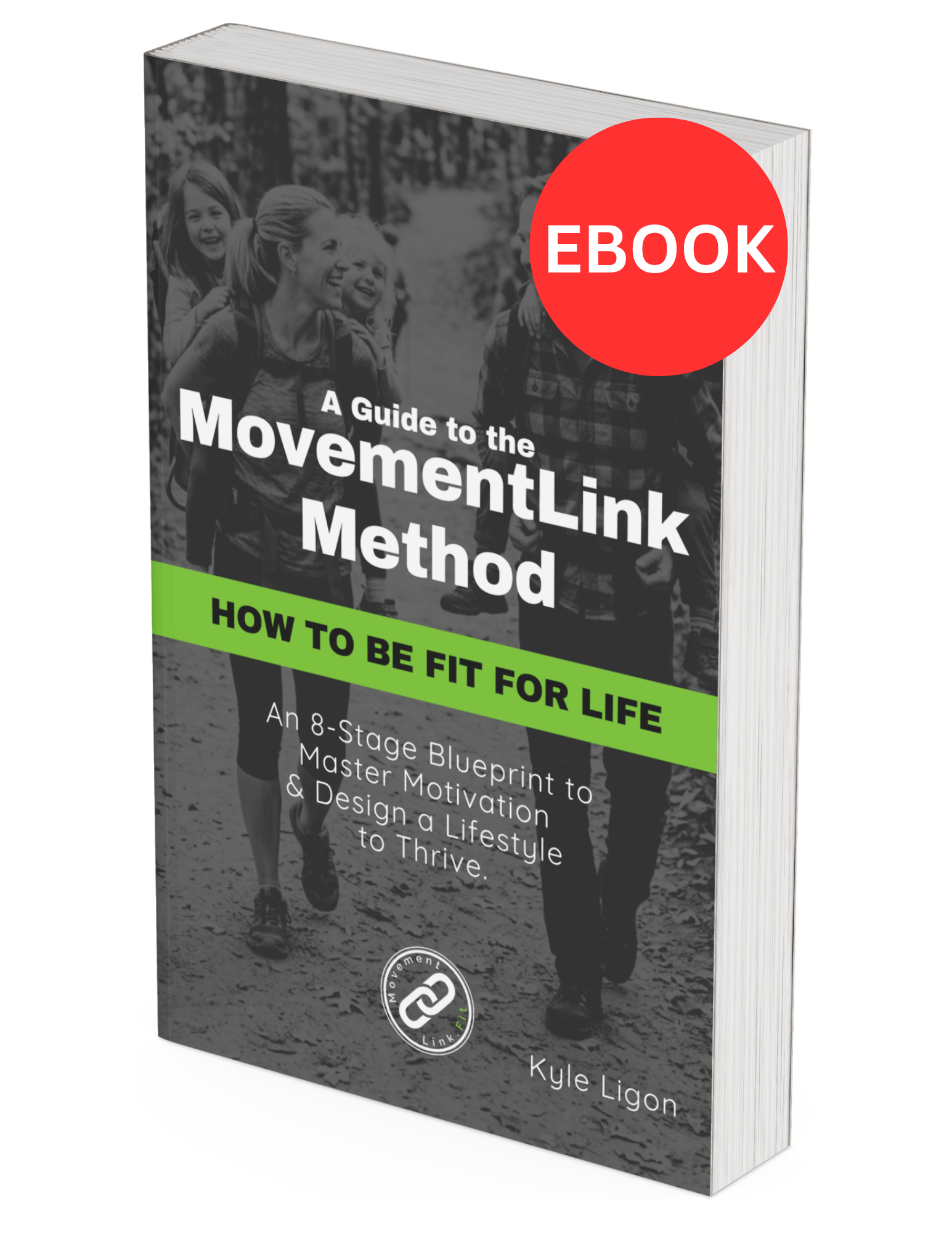
THE EBOOK IS NOW AVAILABLE
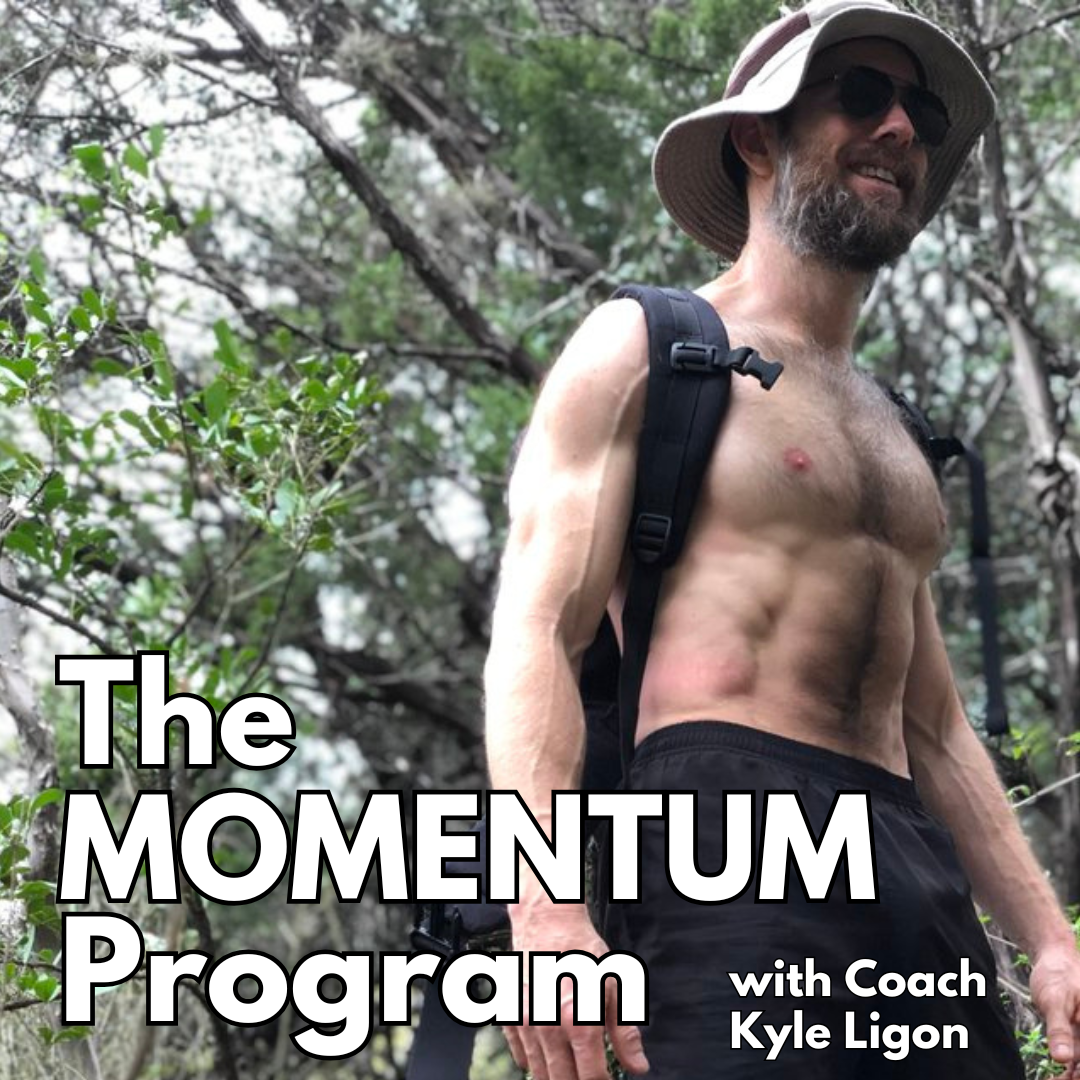
I have been running clients through my MOMENTUM transformation program for 8 years with tremendous success. But, with the amount of 1-on-1 attention I provide in the program, it creates a cost that has been prohibitive for some. I have finally consolidated the MOMENTUM program into one, easy to navigate EBOOK, so that more people can finally access the information that has changed my life and so many others.
When you finally “Get It”, the results you’ve been after are inevitable.
This Month’s Health Challenge
What Do You Need? - by Kelly Dodds
Most health advice focuses on what you should do: eat more protein and veggies, exercise regularly, get more sleep, drink more water.
These are all important things our body needs... but if behavior change were simply about knowing what to do, most people wouldn't struggle with keeping healthy habits. Most of us already know many of the habits that support better health. But why can it be challenging to stick with these habits?
Because every day, we have multiple needs competing for our limited time, energy, and attention.
Understanding Our Needs
Humans have many needs that influence behavior.
We need:
Energy
Sleep and recovery
Safety and security
Social connection
Independence and autonomy
Growth and achievement
Meaning and purpose
Some needs are obvious, while others operate beneath our awareness. We often act first and explain our behavior afterward.
Have you ever eaten a snack when you weren't hungry? Skipped a workout even though you planned to exercise? Stayed up late knowing you have to be up early?
The behavior may not have been caused by a lack of knowledge or discipline. It may have been driven by a different need that was competing for your attention at that moment.
We Are Constantly Being Pulled in Different Directions
Life is full of competing needs. You may want to exercise, but also need recovery. You may want to get more sleep, but also need to finish an important project. You may want to focus on your health, but also feel responsible for caring for your family. These competing needs create an internal pull. Sometimes it feels like you're being pulled in opposite directions.
This internal pull is called tension… It's not a bad thing. Tension is often what motivates growth, adaptation, and change. We don’t want to eliminate tension, we want to recognize it and respond intentionally.
Why This Matters for Health
Many people blame themselves when they struggle with healthy habits. They assume they lack motivation or discipline. However, behavior is often more complicated.
"I know I should exercise, but I'm exhausted."
"I should meal prep, but I'm overwhelmed."
"I need to go to bed earlier, but I finally have some quiet time to myself."
These situations are examples of competing needs. Understanding the needs behind your behavior can help you make better decisions and create more realistic solutions.
When we pause to identify what we need, we create space between impulse and action.
Instead of asking, "Why can't I stay motivated?" Try asking, "What need am I trying to meet right now?" Sometimes the answer is rest. Sometimes it's comfort, security, accomplishment, connection, or a break from stress. Instead of judging the answer, try to understand it.
When we understand what is driving our behavior, we gain more control over our choices.
Turning Awareness Into Action
Observing your needs isn't just an interesting exercise. It can help you design healthier behaviors that actually work. Many people try to change behavior by forcing themselves to do what they think they "should" do. They rely on willpower, motivation, or discipline. Sometimes that works temporarily. But lasting change often comes from understanding the needs behind your behavior and finding better ways to meet them.
For example, if you find yourself reaching for snacks every afternoon, the need may not be hunger. It could be fatigue, stress, boredom, or a desire for a mental break.
Instead of fighting the behavior, ask, "What need am I trying to satisfy?" Once you identify the need, you can explore alternative ways to meet it.
If the need is energy, a short walk or earlier bedtime may help.
If the need is stress relief, a few minutes of movement or deep breathing may help.
If the need is connection, reaching out to a friend may be more effective than food.
This approach can be used for many health habits. The solution likely isn’t “more discipline.” It may be adjusting the plan so it better fits your needs or identifying recurring obstacles.
You may notice that poor sleep leads to cravings and overeating, or loneliness leads to screentime, or skipping lunch leads to skipped workouts. Noticing patterns can provide valuable information. Once you understand what drives a behavior, you can start changing the environment, routine, or strategy that affects it.
Behavior change becomes easier when you work with your needs instead of constantly fighting against them. The goal is to become aware of what is pulling you and make choices that support both your immediate needs and your long-term health.
This Month's Challenge:
When you notice yourself avoiding a healthy habit that you believe you “should” be doing… Ask yourself, "What do I need right now?"
Make a note about any competing needs that prevent the “healthy habit” from happening
Do you notice consistent patterns?
Think of a small change you could make to better support your most important needs, then try it out.
Want to make it easy? Work directly with a MovementLink Coach!