How Your Mindset Can Build Unbreakable Technique
Written by Kyle Ligon - MovementLink.FIT Head Coach
Technique standards from competitions like CrossFit, Hyrox, powerlifting, and weightlifting have infiltrated gym culture as the ultimate litmus test for a “good” rep. But adopting competition standards for your daily training is a mistake that will hold your progress back.
I am not a professional athlete nor have I ever been trying to be one. My goals are functional performance, body composition, joint health, and overall wellness (My Non-Negotiable Fitness Goals). My movement standards need to reflect that, making my training standards significantly different from competition standards
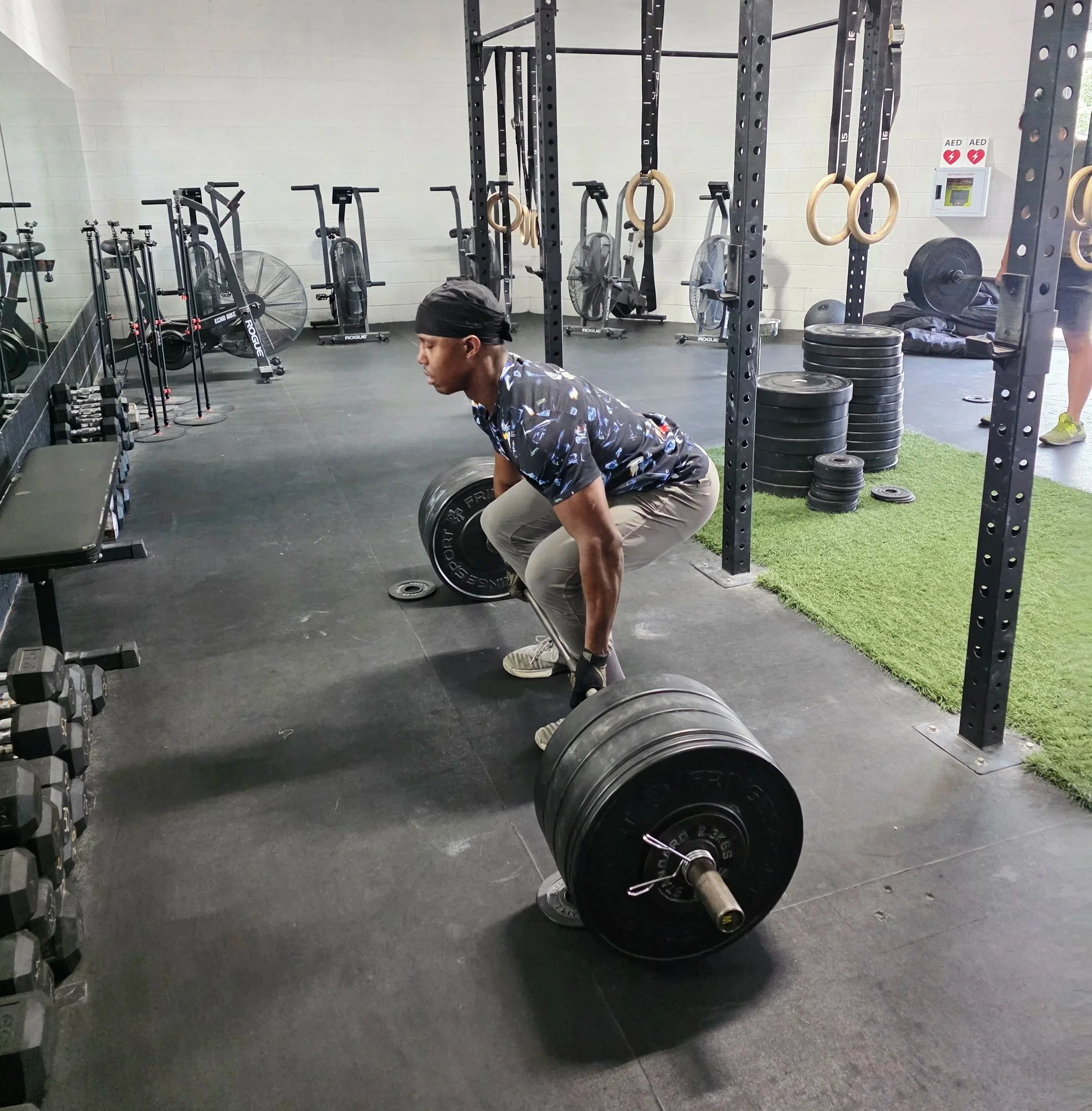
In powerlifting, athletes get three attempts at a back squat, bench press, and deadlift to find their 1-rep max. In CrossFit, variations of the squat appear constantly. In both sports, the standard for a squat is simply standing all the way up at the start and finish, and passing through a position where the hips drop below the knees.
There are purposefully no standards on technique beyond range of motion. This is not just required to simplify judging to a level that is reasonably fair, but it actually creates a situation that is great for us as observers. With athletes free to use whatever technique they want within the low bar of range-of-motion requirements, we get to see what techniques the best in the world adopt, how those choices carry risk, and how much emphasis the athletes put on form. It is survival of the fittest for movement, where only the most effective techniques show up at the world-class level.
Westside Barbell is a powerlifting community known for its world-class lifters, but also for its hardcore reputation involving gear, extreme intensity, and aggressive training environments that sometimes involve alcohol and fighting. Yet, what stands out most is their fanatical focus on developing technique. They are constantly coaching each other on every rep, honing mechanics far beyond the simple standard of, “Did I go low enough?” They hold themselves to a much higher standard in training than they face in competition because they know the best results require elite technique in conjunction with elite strength.
The Context Trap
We’ll come back to the "competition standard trap," but it isn't the only thing you need to watch out for; there is also the "context trap." Most people who are able to think beyond competition standards start looking to the best in the world to learn technique. But often, the context of why those athletes move the way they do is not accounted for.
Powerlifting tests maximal strength, and most federations allow the use of performance-enhancing drugs and specialized gear. Drugs change training volume and recovery protocols dramatically. Gear changes the actual biomechanics of the lift entirely:
| Equipment | Geared / Competition Technique | Functional / Raw Technique |
|---|---|---|
| Weight Belt | Breathe and Push: Put the belt on extremely tight. Breathe into your lower abs and push out 360 degrees against the physical barrier of the belt to brace. | Draw In and Flex: Draw your belly button in, pull your rib cage down, and extend tall. Breathe into your lower abs and flex out in 360 degrees while keeping the belly button drawn in. |
| Squat Suit | Sit Back: A squat suit significantly supports the athlete at the bottom of the squat, making it feel closer to a box squat. The athlete sits far back with more vertical shins to leverage the suit's tension. | Drop Down: Hips travel back, but the squat path is more straight down. The knees travel naturally much further forward than they would with a squat suit, creating a non-vertical shin angle. |
If you are working out to improve your life, play sports, and stay healthy, adopting techniques designed to leverage artificial gear will not have optimal carry-over to the real world.
Setting Your Own Standard
Our standards for our workouts must include both range of motion and technique, and both must be chosen in the context of our bodies, current fitness level, and goals.
There are people in the gym who have tight hips and ankles. They cannot meet the competition standards of a squat unless they compromise their mechanics or force themselves lower than their body can effectively handle. We see a lot of issues in the gym with people trying to force their hips below parallel when they don’t yet have the mobility for it. Range of motion should always be specific to the individual.
For me, it does not matter if a rep would technically count in a competition. Here is how I think about it using the back squat as an example:
Only a back squat that goes through the fullest range of motion my mobility can handle, using techniques that mimic functional movement patterns, meets my criteria. Everything else is a variation that I likely do not include in my program. I even give the other variations satirical names to distinguish them in my head from the actual technique I want to develop. For example, a back squat wearing a weight belt and a squat suit is a powerlifting back squat. I’m not saying it's bad; I’m saying a powerlifting back squat is different than my back squat and is not the best exercise choice for my goals.
Similarly, if my focus is on glute engagement and I perform a rep with dormant glutes, I didn't do a back squat. I did a disengaged glute squat. Just as I wouldn't do a front squat and say I did a back squat, I exaggerate the differences in how technique can break down. I view a knees-caving squat, a rounded-back squat, or a weight-on-the-toes squat as all distinctly different exercises. I play up the ridiculousness of my naming strategy by imagining how absurd it would be for a coach to program a "disengaged glute back squat" for me.
This thinking completely reframes how I track personal records, ensuring I primarily focus on developing techniques that are useful to the life I want to live. I don’t focus on what would pass as a good rep in competition; I track Technical Personal Records (Technical PRs). I might note a heavier weight I lifted that had an issue in my journal, but I will flag the technique breakdown alongside it. That data tells me my body is strong enough for the load, but my skill and coordination haven’t yet caught up to that number.
This is why we shouldn't view workout scores as just numbers on a whiteboard or a pass/fail on competition depth. Instead, we should treat training like a gymnastics competition, which grades both the difficulty and the execution (Scoring Workouts Like a Gymnasatics Competition). Everything in the gym should be done in the context of your goals.
MAKE THE RESULTS YOU WANT A REALITY
I have been running clients through my MOMENTUM transformation program for 8 years with tremendous success. But, with the amount of 1-on-1 attention I provide in the program, it creates a cost that has been prohibitive for some. I have finally consolidated the MOMENTUM program into one, easy to navigate EBOOK, so that more people can finally access the information that has changed my life and so many others.
When you finally “Get It”, the results you’ve been after are inevitable.