What's On My Mind - May 2026
What’s On My Mind
What’s On My Mind
Event-Specific Training (When You Already Have a Base)
This Month’s Health Challenge
Your Fat Loss Strategy Might Be The Problem
What’s On My Mind
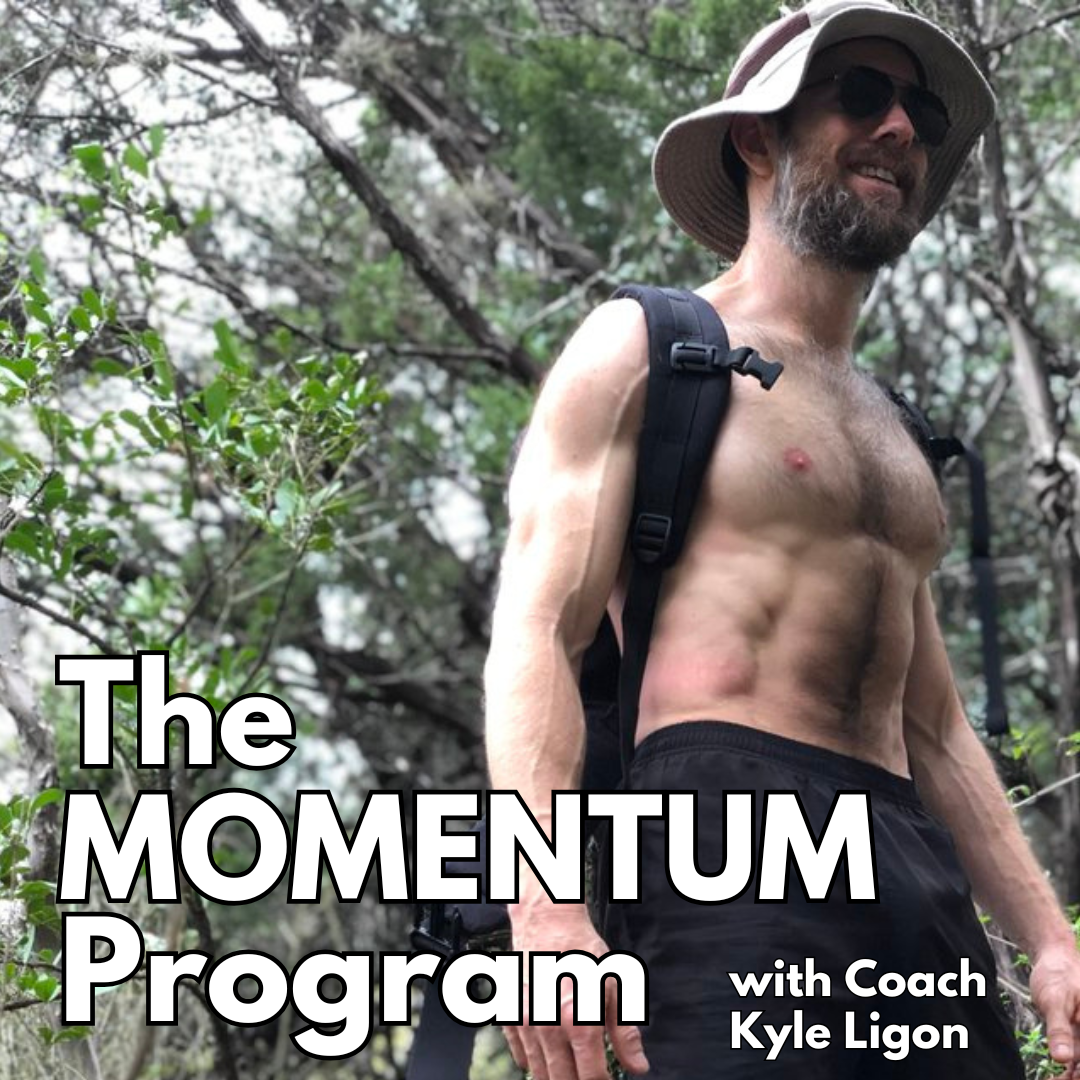
Event-Specific Training (When You Already Have a Base) - by Kyle Ligon
I just rode the MS 150, a 2-day, 150-mile bike ride from Austin to College Station, TX, to raise awareness and money for the MS Society. It’s an incredible event for an amazing cause (you can find more information or donate here).
We rode 85 miles on Day 1 and 70 miles on Day 2. So, although this is a charity ride and not a race, it is definitely not an event most people can just join on a whim. It takes training.
But what type of training?
There’s one obvious answer: ride your bike, a lot. This is what 99% of the riders in the event do. They are cyclists. They have the gear, the expensive bikes, and they spend hours upon hours in the saddle. Most don’t lift weights, cross-train, or do targeted mobility work; they cycle. This gets them ready for the event, mostly.
But, watching the pack, their biggest pain points seem to boil down to two things:
Strength and Power for Hills: The elite bikers have no issues on the climbs we came across, but the vast majority of the amateur riders did, big time. Strength and power training is very different from long endurance pacing. Because most amateur cyclists don’t train with sprints or weights—opting instead for long, steady rides—they only train for hills when they actually happen to come across them, leaving them exposed.
Nagging Pains: Without a dedicated mobility practice or the habit of training through full, functional ranges of motion, many cyclists develop nagging pains (usually around the knee). This is often a simple case of tight quads and a lack of hip extension. It makes perfect sense when you picture the posture of being on a bike—those muscles are constantly locked in a shortened position. Over time, without corrective exercises, things start to tug and pull in annoying, performance-draining ways.
If these pure cyclists replaced just a few of their long endurance miles with heavy strength training, bike sprints, hill climbs, and mobility work, their performance in an event like the MS 150 would drastically improve.
But here is where it gets interesting: when you start incorporating those elements, you notice what else the fitness spills over into. You start resolving daily nagging pains. You build strength and power that can be used for everyday activities, longevity, and overall health. We start to see that by diversifying our workouts, we not only improve our event-specific performance, but we start opening up additional paths for our lives. (More on how workouts produce options for life here).
The ROI of a Functional Base
I love the opportunities my base of functional fitness provides me, allowing me to jump into adventures like this. Let’s look at how I trained for the MS 150. I'm always amazed by how simple my prep is, but I’m also proud because it feels like a true testament to the type of training we do year-round at CrossFit City Limits.
Starting about 5-6 weeks out, I used my Tuesday gym commute for event-specific 'over-under' training. I rode hard on my bike up to the gym (simulating steep hill climbs), and then immediately joined our long, slow Lactate Zone 2 cardio class. This wasn't just a pure Zone 2 workout; it was a deliberate simulation to train my legs to clear lactate and recover while still maintaining a steady endurance pace—exactly what happens when you crest a hill and hit the flats on a 150-mile ride.
Because we do weekly Lactate Zone 2 workouts year-round, those short hard rides to the gym, and subsequent slower rides back home are literally all the extra training I needed outside of my normal 4-6 gym classes a week. Because of the foundation of functional fitness I already have, my cardio, strength, and power were already capable of the 150 mile ride, I just needed to adapt my local tissues and posture to being on a bike for that long. Through just a few dedicated bike-specific workouts, I am able to take on challenging adventures without reorganizing my entire life to prepare for them and without sacrificing any of my non-negotiable fitness goals.
The Takeaway
Here is the ultimate difference:
The cyclist who only does long endurance rides is okay at long endurance rides (hopefully there’s not much elevation change), but not much else.
The cyclist who adds in a little bit of strength, power, and mobility training is very good at long endurance rides, but still not much else.
The functional fitness follower who adds in a pinch of cycling is good at long endurance rides, but also retains the ability to add pinches of other things and jump into a marathon, a Hyrox event, a Spartan Race, or play a competitive game of pickleball—all with minimal changes to their year-round routine.
Functional fitness is the ultimate vehicle for injecting spontaneous, challenging physical adventures into a modern, comfortable life. I’m not just training for a 150 mile bike ride; I’m training to ensure I never have to decline an invitation to do it.
This Month’s Health Challenge
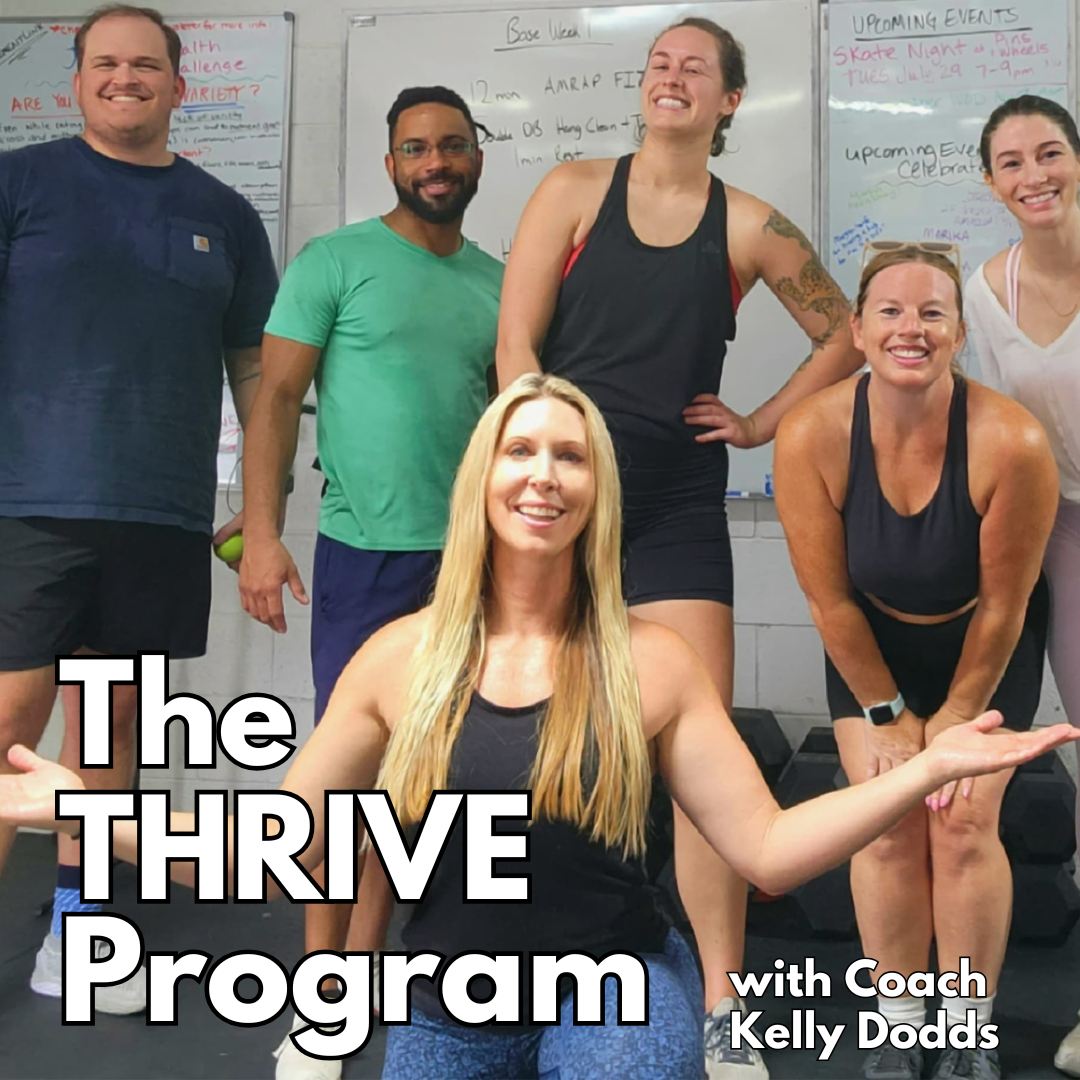
Your Fat Loss Strategy Might Be The Problem - by Kelly Dodds
At some point, almost everyone has seen the scale go down… whether it’s from eating less, exercising more, or being more consistent for a few weeks. In the beginning, it usually works. The scale drops, motivation is high, and it feels like progress is happening quickly. But over time, things tend to stall. Workouts feel harder, energy becomes less consistent, hunger increases. And for many, the weight eventually comes back, and possibly higher bodyfat. It’s easy to assume the issue is discipline or that fat loss is just difficult to maintain. Often, the problem isn’t fat loss itself… It's how it was done.
When body weight decreases, it doesn’t come from a single source. The body is always pulling from a combination of stored fat, lean tissue, and water. Early on, a noticeable drop on the scale is often driven by changes in glycogen and fluid balance, not just fat loss. As the process continues, the composition of that weight loss becomes more important because the goal isn’t just to weigh less. It’s to lose fat while maintaining the tissue that supports how your body functions, muscle, strength, and overall capacity.
How you approach fat loss determines where that weight comes from. A large calorie deficit will almost always produce faster weight loss. But it also creates a more stressful internal environment. Recovery becomes more difficult, training quality declines, and the body becomes more willing to give up lean tissue along with fat. A more moderate approach tends to look less impressive in the short term, but it allows for better outcomes over time. Strength is easier to maintain, energy is more stable, and the changes that occur are more likely to last. This is where the process shifts from simply “losing weight” to actually improving body composition.
Training plays a crucial role in maintaining lean tissue (muscles, ligaments, joints, and bones). But nutrition also has a central role in that process, but not just in terms of calories. A calorie deficit determines whether weight loss happens. Nutrition determines how that process happens. One of the most consistent findings in research is the role of protein during fat loss. When protein intake is sufficient, the body is better able to preserve lean mass, even in a deficit. It also improves satiety, which makes the process easier to sustain.
For most people, a practical target is:
~0.7–1.0 grams of protein per pound of body weight per day
Spread across a few meals rather than consumed all at once
This isn’t about perfect accuracy. It’s about creating a consistent signal to maintain muscle.
Food quality also shapes the experience more than people expect. Two diets can have the same calorie intake but feel completely different depending on food selection. Diets built around more whole, minimally processed foods tend to be more filling and more nutrient-dense, which helps regulate appetite and maintain energy. Including fiber-rich foods (like vegetables, fruits, legumes, and whole grains) slows digestion and helps keep hunger manageable.
In practice, this often looks like:
Building meals around protein + fiber
Choosing foods that keep you full, not just foods that “fit your calories”
Keeping most meals simple and repeatable
These small decisions add up over time.
Carbohydrates and fats are often misunderstood during fat loss. Carbohydrates support training performance. When intake is too low, workouts tend to suffer, which can make it harder to maintain muscle. Fats play a different role, supporting hormone function and healthy cells. In most cases, a balanced approach works best… one that supports both performance and adherence.
Just as important as what you eat is how consistently you eat. Long gaps between meals or overly restrictive patterns often lead to cycles of under-eating followed by overeating. It’s also harder to get sufficient amounts of protein when meals are less frequent. A more consistent structure with regular meals with 20-50g protein included tends to stabilize hunger and make the process easier to manage.
Another aspect of fat loss is that it doesn’t need to be continuous to be effective. Trying to stay in a deficit indefinitely often leads to fatigue, decreased performance, stalled progress, and possible rebound. In some cases, spending time at “maintenance” (where the goal is weight stability) can improve long-term results by restoring energy and making the process more sustainable.
GLP-1 medications have become increasingly common for weight loss, and for many people, they can be an effective tool for reducing body weight by lowering appetite and overall calorie intake. However, the mechanism is still largely driven by creating a significant calorie deficit, often with reduced food intake across the board, including protein. Without intentional nutrition and resistance training, this can increase the likelihood that some of the weight lost comes from lean mass, not just fat. This isn’t unique to these medications, it’s a risk in any aggressive or poorly structured fat loss approach, but it can be more pronounced when appetite is significantly suppressed.
There’s a range where all of this comes together:
If the deficit is too small, nothing changes.
If it’s too aggressive, the body pushes back with fatigue, reduced performance, metabolic adaptations, and increased difficulty maintaining muscle.
In between is where fat loss becomes more effective:
Progress is steady
Strength is largely maintained
Energy is manageable
This is the range most people are actually looking for, even if they don’t initially approach it that way. Fat loss isn’t just about getting lighter. It’s about becoming more capable in a leaner body, in a way that lasts.
This Month’s Challenge:
Prioritize protein at each meal (20-50g per meal, 0.7-1g per lb daily)
Build meals around whole foods (with fiber)
Strength train 2-3 x week
Stay generally active throughout the day (i.e. 8k step daily)
Avoid cutting calories too low, pay attention to hunger cues and energy levels
Want to make it easy? Work directly with a MovementLink Coach!